Skip to content

Palmer’s Direct To You Market
900 Jefferson Road, 14623

(585) 272-9470

Palmer’s Direct To You Market
900 Jefferson Road, Rochester, NY 14623
(585) 272-9470

Menu

How to Grill a Full Meal Without Overcooking Anything

Learn how to grill a full meal with confidence using two-zone heat, smart timing, and simple tips for cooking meats, seafood, and vegetables together.
grilled chicken

Grilling an entire meal is one of the best parts of summer cooking.

But-it can get chaotic quickly. Steaks finish before the vegetables are ready. Chicken takes longer than expected. Shrimp goes from perfect to overcooked in minutes.

The key is not putting everything on the grill at once. A better approach is to set up the grill with different heat zones, cook in stages, and use the cooler side of the grill to finish and hold food as needed.

Quick Grill Order

  1. Build a two-zone grill – Keep one side hot for searing and one side cooler for finishing and holding.
  2. Start with what takes longest – Chicken, sausage, potatoes, corn, and thicker vegetables go on first.
  3. Add steaks, burgers, and chops next – Sear them over direct heat, then move thicker cuts to indirect heat if needed.
  4. Save seafood and tender vegetables for last. – Shrimp, salmon, scallops, asparagus, and zucchini cook quickly.
  5. Finish, rest, and serve – Rest meats before slicing, toast buns last, and bring everything together at the end.
grilling zone

Build a Two-Zone Grill

The most important step happens before any food goes on the grill. Set up your grill with two heat zones: one hot side for direct heat and one cooler side for indirect heat.

The hot side is where you sear steaks, burgers, chops, and vegetables that need color. The cooler side is where you finish thicker cuts, hold food that is already cooked, or move items when flare-ups happen.

For a charcoal grill, push the coals to one side and leave the other side with little or no charcoal underneath. For a gas grill, turn one burner higher and keep another burner lower or off.

This setup gives you control. Instead of trying to cook everything over the hottest part of the grill, you can move food around as needed. That makes it much easier to grill multiple items without burning the outside or leaving the center undercooked.

Start with What Takes Longest

For Charcoal Grills: Create a two-zone fire by piling coals to one side of the grill. This allows you to sear the steak on the hot side and finish cooking on the cooler side.

For Gas Grills: Turn on one or two burners to high and keep one burner off to create a hot zone and a cooler zone.


Preheat the Grill

When you are grilling a full meal, timing matters more than speed. Not everything should go on the grill at once.

Start with chicken, sausages, potatoes, corn, and thicker vegetables. These items need more time and usually benefit from steady heat. Chicken and sausage can start over direct heat for color, then move to the cooler side to finish cooking through. Potatoes, corn, and dense vegetables also need a head start.

This is also the point where you can get the grill working for you. While these longer-cooking items are on the cooler side, you still have the hot side available for searing the next round of food.


A simple rule: if it is thick, dense, bone-in, or needs to cook all the way through, put it on first.


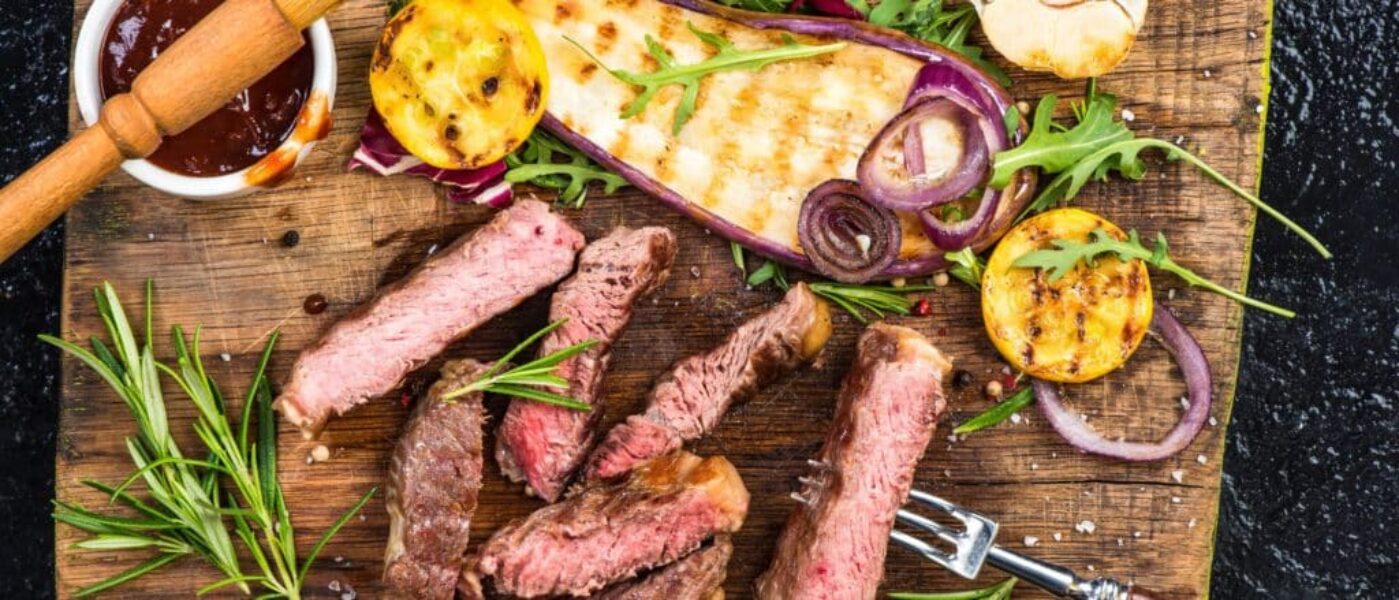
Sear the Steak

Place the steak on the hot side of the grill to sear. Use the 60/40 rule: sear one side for 60% of the total cook time, then flip and cook the other side for 40% of the time.


Add Steaks, Burgers, and Chops Next

Once the longer-cooking items are underway, add steaks, burgers, and chops. These foods need a good sear, but they do not all need to stay over direct heat the entire time.

For steaks and chops, start over high heat to build a crust, then move thicker cuts to indirect heat to finish more gently. This helps prevent the outside from getting too dark before the center is ready.

Burgers are usually cooked more directly, but they still benefit from having a cooler area nearby. If flare-ups happen or the outside is browning too quickly, move them away from the flame for a few minutes.


This is also when a meat thermometer becomes especially useful. Grill marks and color can be misleading. Checking the internal temperature helps you know when to move food, when to keep cooking, and when to pull it from the grill.


meat thermometer

Finish, Rest, and Serve

The last few minutes are about bringing the meal together.

Move finished meats to a platter and let them rest before slicing. Resting helps the juices settle and gives you time to finish vegetables, toast buns, or warm bread on the grill.

Grill buns and bread last. They only need a minute or two and can burn quickly, so keep them close and watch carefully.

Before serving, slice steaks and chops against the grain, cut vegetables into serving pieces, and bring everything to the table together. With a little planning, the full meal comes off the grill hot, rested, and ready to serve.


Keep reading

Similar posts you may enjoy.

Get inspired

Get inspired

Related recipes to inspire your next meal.

All recipes

Browse our full library of delicious recipes. Filter by dish, ingredient, and more!