

 Palmer’s Direct To You Market

Whole Certified Angus Beef® Tenderloin with Herb Butter
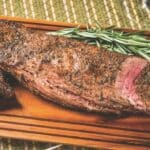
A whole Certified Angus Beef® tenderloin seasoned overnight with garlic herb butter, then roasted at high heat for a beautifully browned holiday centerpiece that’s surprisingly straightforward to prepare.
- Prep Time: 20 minutes
- Cook Time: 1 hour 15 minutes
- Total Time: About 3 hours, plus overnight
- Yield: 10 to 12 servings (about 7 ounces (raw) each) 1x
- Category: Main Course
- Method: Roasting
- Cuisine: American
Ingredients
- 1 whole Certified Angus Beef® tenderloin, trimmed (about 5 pounds)
- 4 tablespoons Upstate Farms unsalted butter, softened
- 6 cloves garlic, minced
- 3 tablespoons fresh rosemary, minced
- 2 tablespoons fresh thyme, chopped
- 2 tablespoons Palmer’s Nearly Famous Coarse Sea Salt
- 1½ tablespoons Palmer’s Nearly Famous Black Pepper, coarsely ground
Instructions
-
Tie the tenderloin (the day before). Set aside any trimmings packed with the tenderloin for another meal. Fold the thin tail end underneath so the roast is an even thickness, then tie with butcher’s twine every 1½–2 inches. This helps it cook evenly from end to end.
-
Season the day before. Combine softened butter, garlic, rosemary, and thyme. Rub evenly over the tenderloin, then season with salt and black pepper. Place on a rack set over a sheet pan, loosely cover, and refrigerate overnight on the lowest shelf.
-
Prepare for roasting. Remove the tenderloin from the refrigerator about 45 to 60 minutes before cooking to take off the chill. If any liquid has pooled on the surface, gently blot it, leaving the herb coating in place.
-
Preheat the oven. Heat oven to 450°F. Place the tenderloin on a rack in a roasting pan.
-
Start hot. Roast at 450°F for 15 minutes to develop a browned exterior.
-
Finish gently. Reduce oven temperature to 325°F and continue roasting, about 1 hour for medium. Start checking after about 40 minutes: insert a thermometer into the center of the thickest part. Remove from the oven when it reads 135 to 140°F for medium, or see the doneness chart in the Notes. The temperature will rise another 5 to 10°F while resting. USDA recommends whole cuts of beef reach 145°F followed by at least a 3-minute rest.
-
Rest. Transfer the tenderloin to a cutting board, tent loosely with foil, and rest 15 to 20 minutes before slicing.
-
Serve. Remove the butcher’s twine and slice into approximately 1-inch medallions.
Notes
- Doneness chart (remove from oven at these temperatures; the roast will rise 5 to 10°F while resting):
- Rare: 120 to 125°F
- Medium-rare: 125 to 130°F
- Medium: 135 to 140°F
- Medium-well: 145 to 150°F
- Well done: 155°F and up
- Whole tenderloins vary considerably in thickness and shape, so cooking time is only a guide. A probe thermometer is the best way to avoid overcooking an expensive cut.
- Equipment: roasting pan with a rack, sheet pan with a rack (for chilling overnight), butcher’s twine, meat thermometer and foil.
Nutrition
- Serving Size: About 7 oz (raw)